It’s chilly outside and the holiday season has just come to a close. National Houseplant Appreciation Month gives us an excellent opportunity to celebrate our leafy inside companions and be reminded of all the benefits they provide.
Studies tell us that plants can purify the air, lift our mood and reduce our stress levels, making us happier and healthier. The National Initiative for Consumer Horticulture (NICH) wants everyone to understand how plants can help create healthy environments indoors.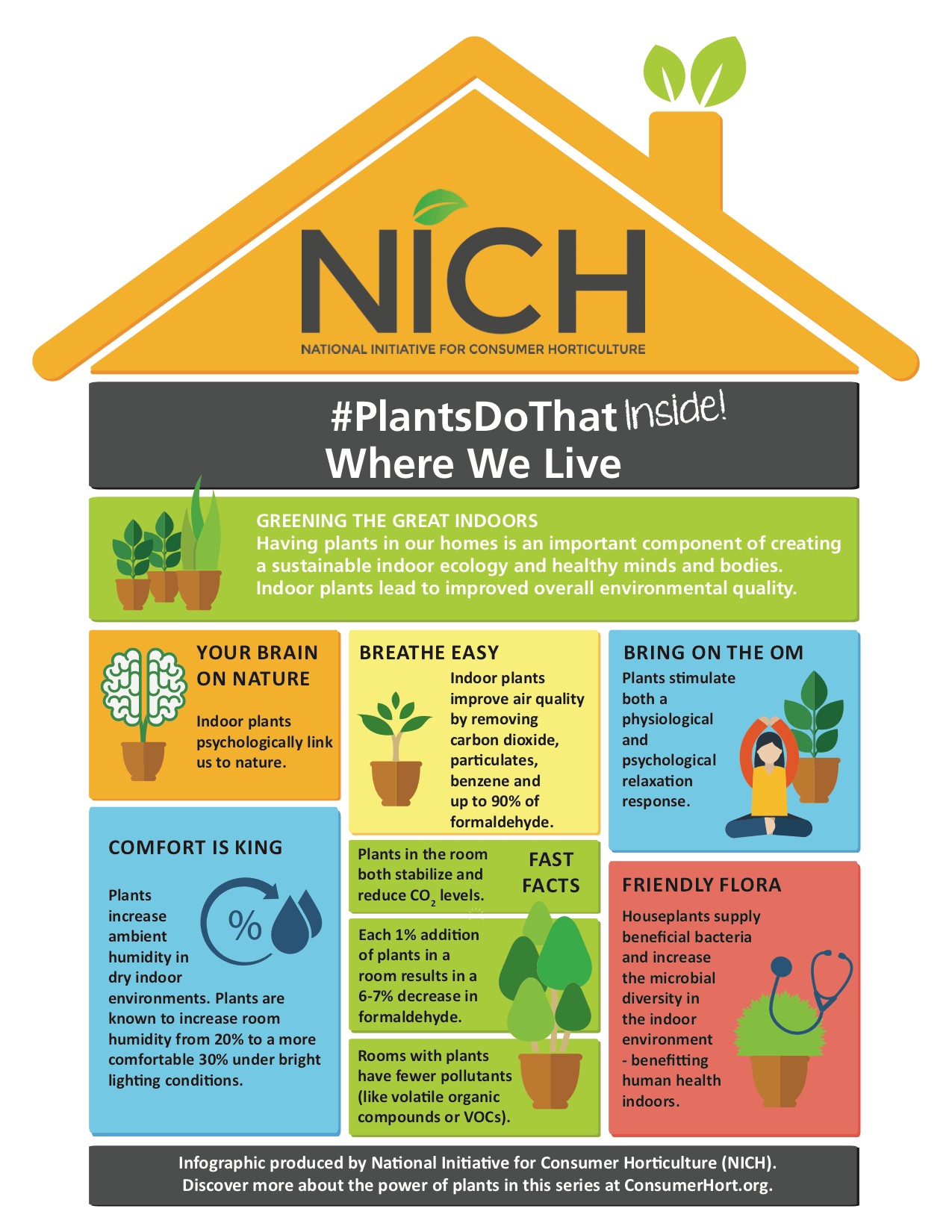 This infographic, part of a series called #PlantsDoThat, shows at a glance why we should fill our homes with wonderful, happiness-inducing plants of every shape, size and color.
Maintaining Houseplants in Winter
Less-than-favorable conditions, such as the shorter daylight hours and drying indoor heat, make winter a particularly challenging time to maintain houseplants. Here are some tips for keeping your plants healthy and happy.
- Place your plant in the right amount of light for its needs. To compensate for the lower angle of the sun and fewer daylight hours, you may need to move plants to give them as much sunlight as possible. A south-facing window is best for those that benefit from bright light. Consider investing in a lamp that you can accommodate a grow light and direct it towards the plant. If you notice that the plant begins to stretch toward the light source, be sure to rotate your pots a quarter turn each time you water.
- Cut back on watering and make sure your plants are in pots with drainage holes. It is tempting to water more with the dry indoor air, but your plants are growing slower, and you should cut back on the volume and frequency of watering. Check the soil moisture with your finger or use a soil moisture meter. Use room-temperature water so as to avoid shocking your plant.
- Avoid temperature extremes. Place your plants in the right temperature, away from heaters, active fireplaces or cold drafts. Most plants like temperatures we do, 70s during the day and 60s at night. Provide good ventilation. Sudden blasts of cold or hot air can cause leaf drop and foliage damage.
- Stop feeding in fall and winter. Most plants benefit from a light feeding once a month during their active growth in spring and summer, but it is not needed when plants go into their normal dormancy period. Both over- and under-feeding can be harmful in general.
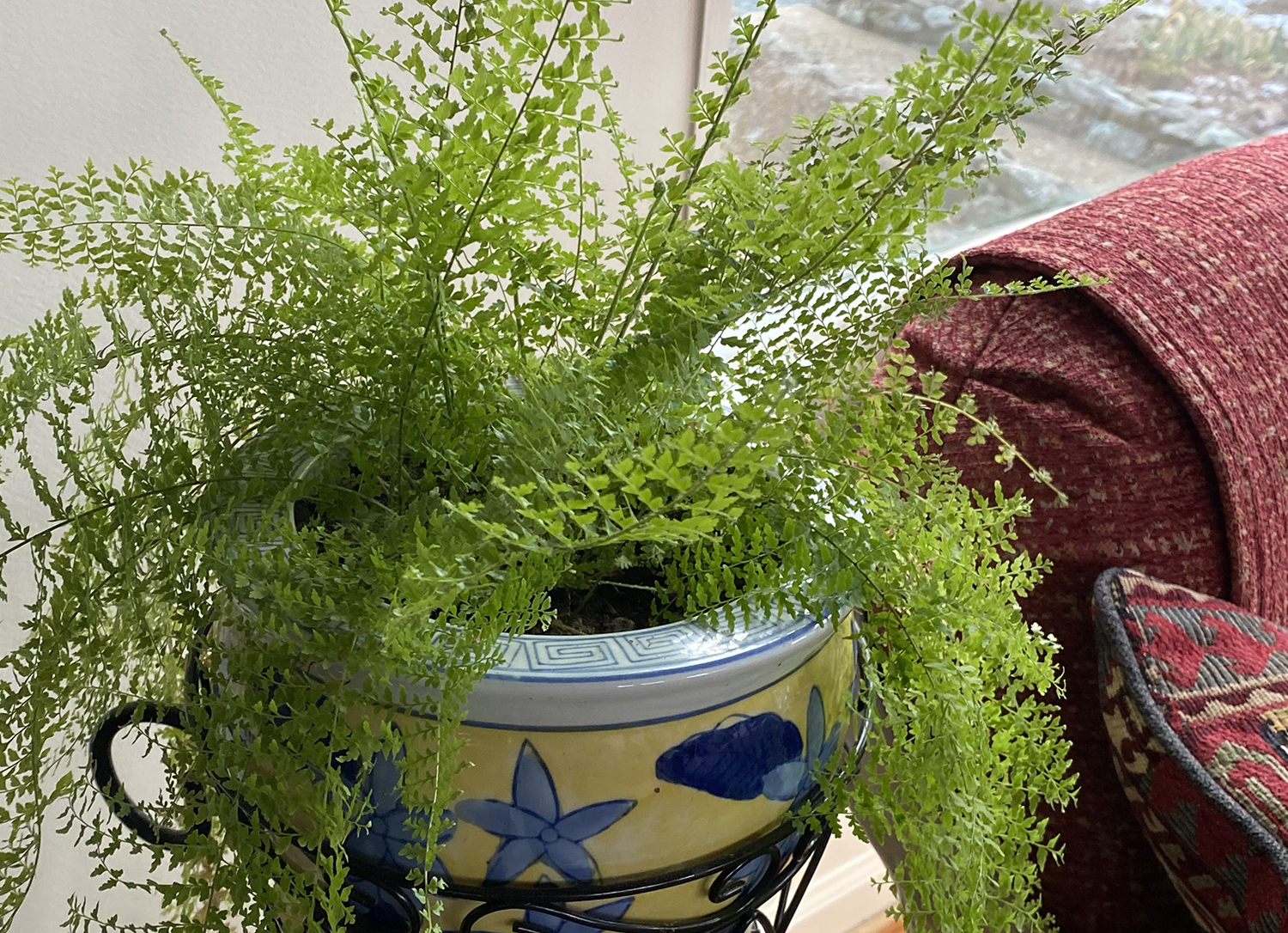 Increase the humidity. Our heated homes in the winter are pretty dry, while many of our houseplants are tropical and prefer high levels of humidity. You can run a humidifier or provide moisture in the air around plants by using a pebble tray. Fill a waterproof tray with pebbles or pea gravel and set your potted plants atop the rocks. Keep the water level below the top of the pebbles. Another option is to move plants into a well-lit bathroom or kitchen where the moisture from showers and cooking activities will provide a humidity boost.
- Remove any fallen leaves or flowers from the soil. Also, cut out any diseased plant parts. Dust the leaves with a damp sponge so they get as much light as possible.
- Check for pests regularly. Fall and winter are notorious for surges in pest populations. Factors can include houseplants being brought indoors after spending summer outside, as well as overwatering, overfeeding, and low humidity in the dry heated home. Spider mites thrive in warm, dry conditions of a heated home. Once such pests get established indoors, they can quickly multiply and infest multiple plants, which may make control more difficult.
- Learn how to identify and treat the most common houseplant pests. Here are some helpful resources: Spider Mites, VCE Publication 444-221 (ENTO-502NP); Mealybugs on Indoor Plants, University of Maryland Extension; Common Houseplant Insects and Related Pests, including aphids, thrips and scale, Home and Garden Information Center, Clemson Extension.
You may wish to adopt the practice of “interiorscaping,” using plants as living art to create spaces that help us feel more vibrantly alive. On its own, a single plant is just a plant. Add another and it can become a thoughtful display and arrangement. Think of your design as a three-dimensional piece of living sculpture. Incorporate these four design elements:
- Scale—consider size and proportion for balance and symmetry or different sizes to draw the eye to create flow and movement.
- Shape—plants with similar shapes can create harmony while plants with contrasting shapes can add visual interest and provide a sense of drama.
- Color—the many different shades and tones found in nature have emotional properties: greens are restful and reassuring; reds and oranges reflect warmth and energy; white suggests purity and calm. Use color to set the mood for your space.
- Texture—texture can be both visual and tactile. It can encompass how the plant’s foliage interacts with light and shadow, as well as sensory elements. For example, velvety leaves give a soft appearance while smooth, glossy leaves offer a crisp, bright look. Texture can range from the plump, fleshy leaves of succulents to the spiky prickles of cacti to the light feathery foliage of ferns. Your choice of textures, creating harmony vs. contrast, will set the tone and mood of the space.
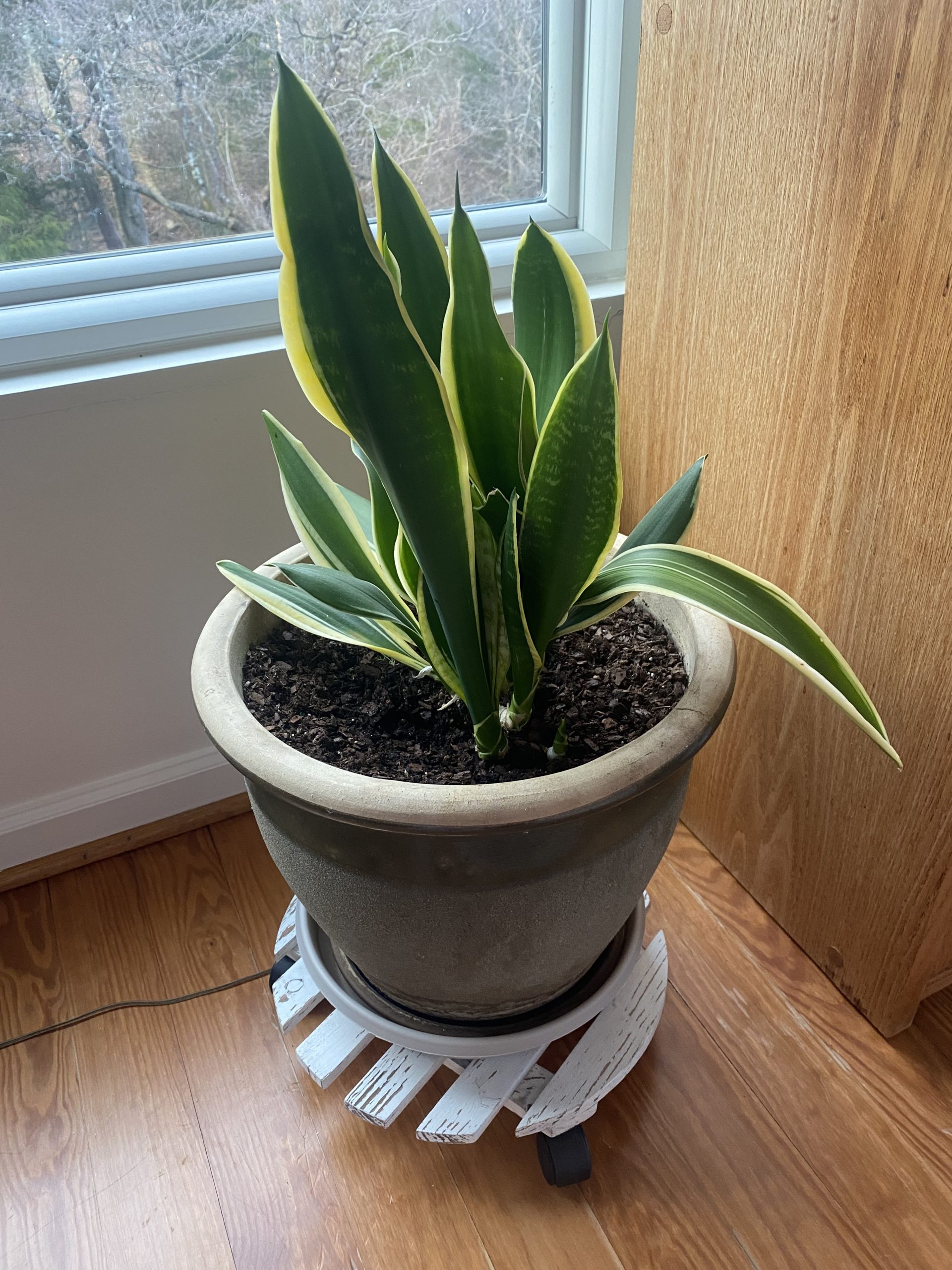
Expanding your awareness of what houseplants can do will give you a new appreciation for indoor plants wherever you are lucky enough to encounter them—from the waiting room at the doctor’s office to your own windowsill. January is all about raising awareness of the numerous benefits of tending to an indoor plant. It is the perfect time to brighten up your house with a lovely new plant that you can enjoy all year long.
Other helpful resources:
Indoor Plant Culture, VCE Publication 426-100
Resources for Indoor Plants, VCE
Consumer Horticulture Benefits for Individuals and Families
NICH: An Organization That Helps Consumer Horticulture Find its Niche, Home and Garden Information Center, Clemson Cooperative Extension
The Complete Houseplant Survival Manual by Barbara Pleasant, Hachette Book Group